


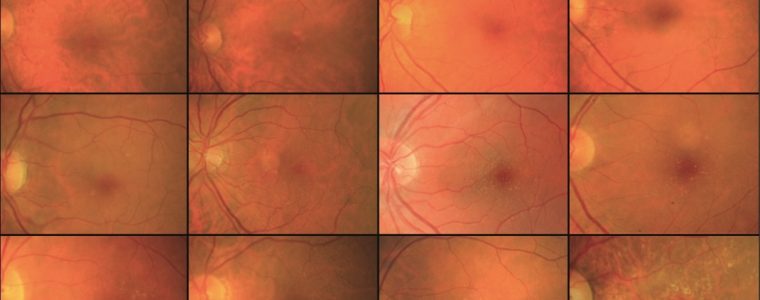
Uveitis represents a heterogeneous group of diseases, characterised by intraocular inflammation and includes non-infectious forms of uveitis.
Uveitis: an inflammatory disease
The term 'uveitis' technically describes inflammation of the uvea, the vascular tunic of the eye that anatomically includes the iris, ciliary body and choroid.

Since intraocular inflammation can affect surrounding tissues, the clinical term uveitis can include inflammation of the retina (retinitis), optic disc (papillitis) and vitreous (vitritis).
Prevalence
5-10% of vision problems in the world's population is caused by uveitis, which is therefore a significant cause of eye disease.
L'uveitis can be classified according to the aetiology or the anatomical ocular site affected by the disease.
Classification by aetiology
- Infectious uveitis due to tuberculosis, syphilis or toxoplasma; it requires treatment of the underlying infection with antimicrobials, sometimes accompanied by corticosteroids to reduce the severity of the inflammation.
- Non-infectious uveitiswhich is believed to be autoimmune (or at least autoinflammatory); most treatments are based on corticosteroids or other immunosuppressants.
- Masked uveitisin which the primary disease is not inflammatory, such as that observed in intraocular lymphoma. The treatment of masked uveitis is specific to the cause of its onset.
Classification by anatomy
Anatomically, uveitis is classified according to the primary site of inflammation:
- Anterior uveitisin which the primary site is the anterior chamber, iris and pars plicata
- Intermediate uveitisin which the primary site is the vitreous body and the pars plana
- Posterior uveitisin which the primary site is the retina or choroid
- Panuveitein which inflammation is distributed throughout all ocular districts
Symptoms
The symptoms of uveitis depend on the site of inflammation, but in general can be identified as:
- reddening
- pain
- light sensitivity
- floaters or flying flies
- blurred vision
Focus on non-infectious uveitis
Non-infectious uveitis represents, among ocular diseases, one of the main causes of visual loss due to its typically relapsing course and the high frequency of complications, which tend to increase with each new relapse with sometimes irreversible damage to the ocular structures.
Corticosteroids remain the therapy of choice in the treatment of non-infectious uveitis, however, the side effects associated with their chronic use, especially at high dosages, are well known and serious.
Hence the need to identify viable alternative therapeutic strategies aimed at controlling ocular inflammation while preventing recurrences and associated ocular complications.
The search for new and effective therapies is constantly evolving and most efforts have been concentrated in two main directions in recent years: intraocular therapies and biological drugs.
Non-infectious uveitis and associated diseases
Most causes of non-infectious uveitis appear to be autoimmune or autoinflammatory in nature and may be associated with systemic conditions characterised by dysregulation of the immune system or of theinflammasome (a multi-protein sensor that activates innate immunity after detecting pathogens).
Diseases associated with uveitis include ankylosing spondylitis, of which uveitis is the most common extra-articular complication, affecting up to 50% of patients.
Similarly, uveitis is a significant extra-articular manifestation of inflammatory bowel disease and reactive arthritis, although less common than in ankylosing spondylitis.
The autoimmune causes of non-infectious uveitis are to be found in an inappropriate immune response, mediated by T lymphocytes, which recognise and attack cells of the same organism rather than foreign pathogens.
Treatment
The treatment of non-infectious uveitis is chosen on the basis of the location of the inflammation.
Treatment of non-infectious anterior uveitis
- Topical corticosteroids such as dexamethasone 0.1% or prednisolone acetate 1%
- Midriates like cyclopentolate at 1%
- Subconjunctival injection of corticosteroids or short course of oral corticosteroids in severe cases
Treatment of intermediate, posterior or panuveitis non-infectious uveitis
- Systemic treatment with corticosteroids is common as first-line therapy. Failure to achieve therapeutic goals indicates the need for alternative or additional treatment, such as the introduction of a second-line immunosuppressant or additional local therapies. The use of biological therapies is effective and is commonly used as third-line treatment. In ocular inflammatory diseases of the posterior segment, intravitreal injections of corticosteroid drugs are one of the main therapeutic strategies used in clinical practice. Among intravitreal implants, the slow-release device based on fluocinolone acetonide.
- Local treatment is usually based on corticosteroids. These drugs are effective, but have significant rates of increased intraocular pressure and cataract formation. Despite these limitations, they are very useful especially in the treatment of unilateral or asymmetrical diseases where they can mitigate the required level of systemic immunosuppression.
Biological drugs
Immune response modifiers, or so-called 'biologics', are relatively new drugs in the treatment of ocular inflammatory diseases with non-infectious genesis.
Developed and approved for the systemic treatment of autoimmune inflammatory diseases (e.g. Behçet's disease, juvenile idiopathic arthritis, rheumatoid arthritis, ankylosing spondylitis, etc.), they have been starting to find their off-label use in the context of numerous non-infectious ocular inflammatory diseases for a few years now.
Therefore, in recent years their immunomodulatory potential has increasingly pushed scientific research towards new clinical trials to validate their efficacy and safety in the treatment of non-infectious Uveitis.
- Unnat Krishna, Deji Ajanaku, Alastair K Denniston, Theodora Gkika, Uveitis: a sight-threatening disease which can impact all systems, Postgrad Med J. 2017 Dec;93(1106):766-773. doi: 10.1136/postgradmedj-2017-134891
- Theodora Tsirouki et al, A Focus on the Epidemiology of Uveitis, Ocul Immunol Inflamm. 2018;26(1):2-16. doi: 10.1080/09273948.2016.1196713. Epub 2016 Jul 28.
- James T Rosenbaum et al, New observations and emerging ideas in diagnosis and management of non-infectious uveitis: A review, Semin Arthritis Rheum. 2019 Dec;49(3):438-445. doi: 10.1016/j.semarthrit.2019.06.004.
 English
  Italian
  Spanish