


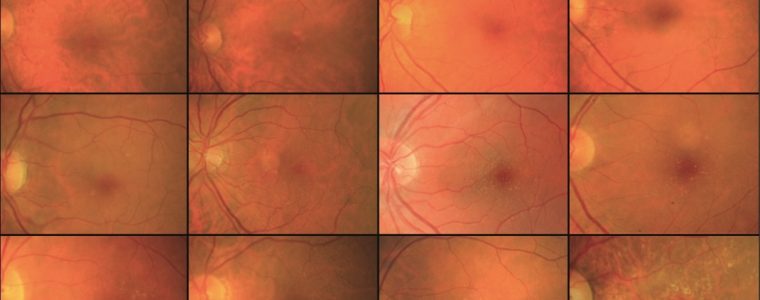
Metformin is among the most prescribed drugs worldwide for the treatment of type 2 diabetes mellitus. It is an orally administered hypoglycaemic agent, belonging to the biguanide class, for which potential protective effects against diseases affecting the retina and posterior segment of the eye have been hypothesised in the ophthalmic field, particularly in counteracting the onset and progression of AMD.
Metformin and hypoglycaemic therapy
Metformin's main mechanism of action is to reduce hepatic glucose production, improve insulin sensitivity and facilitate glucose uptake by muscle cells. Unlike other antidiabetics, metformin does not cause weight gain, making it a particularly advantageous therapeutic choice for overweight or obese patients.
Chronic metformin therapy may lead to gastrointestinal side effects such as nausea, vomiting, diarrhoea, loss of appetite and, in rare cases, lactic acidosis.
Metformin and age-related maculopathy
At the retinal level, metformin appears to have anti-inflammatory, anti-angiogenic, anti-fibrotic and antioxidant activity, with protective effects against numerous ocular diseases, such as diabetic retinopathy, hereditary retinopathies such as retinitis pigmentosa, primary open-angle glaucoma, retinal venous occlusions and uveitis.
The potential benefits of metformin with respect to age-related macular degeneration (AMD), which is the most frequent cause of legal blindness in high-income countries, with a prevalence that grows exponentially with age, deserve specific consideration. Globally, AMD is among the top five causes of vision loss, and in the coming decades, as the average age of the population increases, the number of people diagnosed with AMD is expected to rise by more than 50%, possibly reaching 288 million by 2040.
AMD is a chronic progressive disease, degenerative in character, with a tendency to become bilateral. It affects the macula, the central region of the retina responsible for distinct vision of image details, and there are two forms:
– the 'dry' or atrophic AMDcharacterised by the accumulation below the macula of deposits of yellowish material, the drusenwhich progressively alter the functionality of photoreceptors, the cells responsible for the perception of light stimuli;
– wet' or 'neovascular' AMD, fortunately less frequent than dry, but with a more disabling outcome, characterised by the formation of abnormal small blood vessels below the macula. These vessels, with very fragile walls, can easily ooze fluid, or rupture, causing haemorrhages in the retina.
Therapy of AMD
To date, AMD constitutes an 'unmet medical need', as there is no universally approved treatment capable of halting its onset or stopping the progression of degenerative retinal changes. The treatments that have represented a real revolution in recent years, as they are able to counteract the progression of maculopathy towards blindness, are the intravitreal anti-VEGF therapies that are used for neovascular AMD. However, these are not definitive cures, but therapies that produce benefits for a limited time and then have to be repeated. In addition, intravitreal anti-VEGF therapies are not effective in cases of geographic atrophy and are not indicated to prevent the dry form, for which medical therapy with dietary supplements, based on the AREDS 1 and 2 studies, is recommended with limited efficacy.
Therefore, proposing drugs that are already in use for other therapeutic goals can pave the way for the introduction of therapies that are highly safe and effective and that can become available quickly and inexpensively.
This is the case with metformin, whose potential in the treatment of AMD has been taken into account in several retrospective clinical studies, the results of which are, however, not unequivocal.
Clinical studies
A large 2021 case-control study of 312,404 newly diagnosed AMD patients compared with 313,376 controls reported that metformin use was associated with reduced odds of developing age-related macular degeneration in a dose-dependent manner, with low to moderate doses showing the greatest potential benefit.
Similarly, another case-control study, conducted by Brown et al. (2019) using the electronic medical records of patients at the University of Florida, found that patients who had been diagnosed with diabetes and had been treated with metformin had advantages in terms of protection from the onset and progression of AMD.
In 2019, Chen et al. conducted a retrospective cohort study to examine the potential benefits of metformin on the development of AMD in patients with a known diagnosis of type 2 diabetes mellitus, using the Taiwan NHIRD. A total of 45,524 metformin users and 22,681 non-users were identified among diabetic patients. Overall, metformin users had a lower risk of developing AMD. The protective effects of metformin increased with longer treatment duration (>4 years), higher total dose (>1400 g) and higher daily dose (>2.1 g/day).
In the opposite direction are the results of a study published in 2025 in Jama Ophthalmology by researchers at the University of Cleveland (Ohio, USA), who used the TriNetX platform to gain access to the de-identified electronic records of more than 130 million US citizens. They selected elderly subjects (>65 years) and created two cohorts: the first cohort included subjects without AMD who had been prescribed (n=297,008) or not prescribed (n=1,269,644) metformin; the second cohort included subjects with initial or intermediate non-exudative AMD with (n=12,843) or without (n=77,279) metformin prescription.
Using the propensity score matching method to compare individuals with similar characteristics, they then estimated the risk of onset (first cohort) and progression (second cohort) of AMD.
The study authors concluded that subjects exposed to metformin had the same risk of developing AMD as non-exposed subjects. Their results also show that in patients with mild or moderate non-exudative AMD, metformin does not influence the risk of progression to geographic atrophy or neovascular AMD.
Their concluding recommendation is that until unambiguous causal evidence is available, the currently available evidence does not support a therapeutic repositioning to prescribe metformin solely to prevent AMD or slow its progression. However, by the authors' own admission, the study has numerous limitations, in particular the fact that all results identify associative rather than causal connections.
Conclusions
However, in patients already on hypoglycaemic therapy with metformin, the protective effect, documented by in vitro and in vivo studies, in inhibiting the accumulation of oxidised phospholipids in retinal pigment epithelium cells, protecting them from death, and the neovascularisation of the choroid, delaying ocular degenerative processes, remains to be considered.
- Amin SV, Khanna S, Parvar SP, Shaw LT, Dao D, Hariprasad SM, Skondra D. Metformin and retinal diseases in preclinical and clinical studies: Insights and review of literature. Exp Biol Med (Maywood). 2022 Feb;247(4):317-329. doi: 10.1177/15353702211069986
- Romdhoniyyah DF, Harding SP, Cheyne CP, Beare NAV. Metformin, A Potential Role in Age-Related Macular Degeneration: A Systematic Review and Meta-Analysis. Ophthalmol Ther. 2021 Jun;10(2):245-260. doi: 10.1007/s40123-021-00344-3.
- Stewart JM, Lamy R, Wu F, Keenan JD. Relationship between Oral Metformin Use and Age-Related Macular Degeneration. Ophthalmol Retina. 2020 Nov;4(11):1118-1119. doi: 10.1016/j.oret.2020.06.003.
- Brown EE, Ball JD, Chen Z, Khurshid GS, Prosperi M, Ash JD. The Common Antidiabetic Drug Metformin Reduces Odds of Developing Age-Related Macular Degeneration. Invest Ophthalmol Vis Sci. 2019 Apr 1;60(5):1470-1477. doi: 10.1167/iovs.18-26422. Brown EE et al. Invest Ophthalmol Vis Sci 2019;60:1470-47.
- Jindal DA, Hanna J, Shaia JK, et al. Metformin and the Development of Age-Related Macular Degeneration. JAMA Ophthalmol. 2025;143(10):844–853. doi:10.1001/jamaophthalmol.2025.3070
 English
  Italian
  Spanish